 The Castles of Scotland
Barnes Castle
Barnes Castle, a picturesque ruinous old building, built by the Setons but never completed, near Athelstaneford in East Lothian in south-east Scotland.
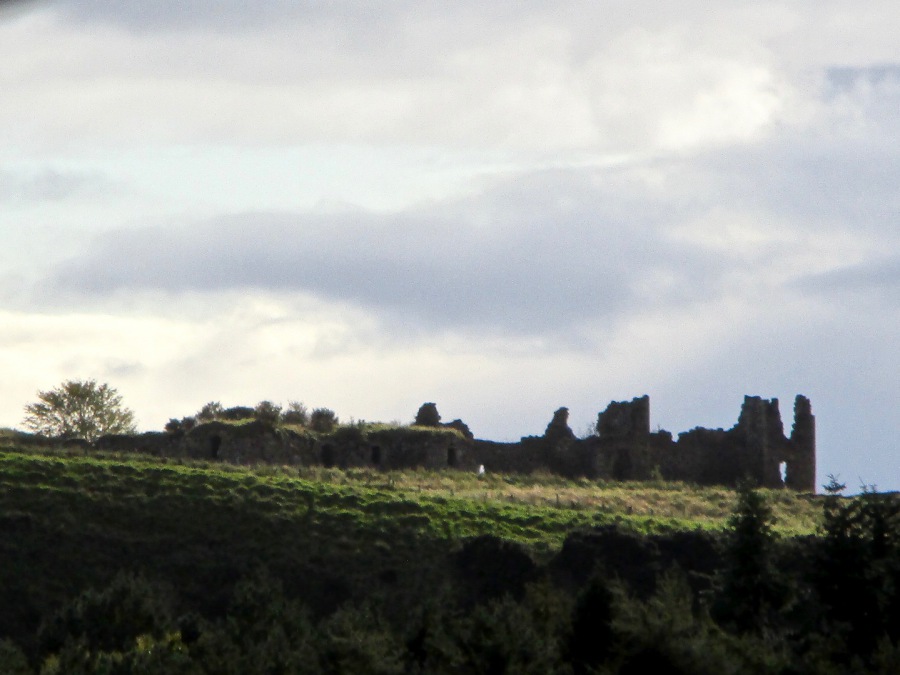 Barnes Castle (© Martin Coventry)
Lothians: About 2 miles north-east of Haddington, south of minor road between B1347 and Barney Mains, about 0.5 miles south-west of Athelstaneford.
Ruin or site NT 529766 OS: 66 EH41 3SA
OPEN: The castle can be reached from a footpath near Athelstaneford Church. View from exterior.
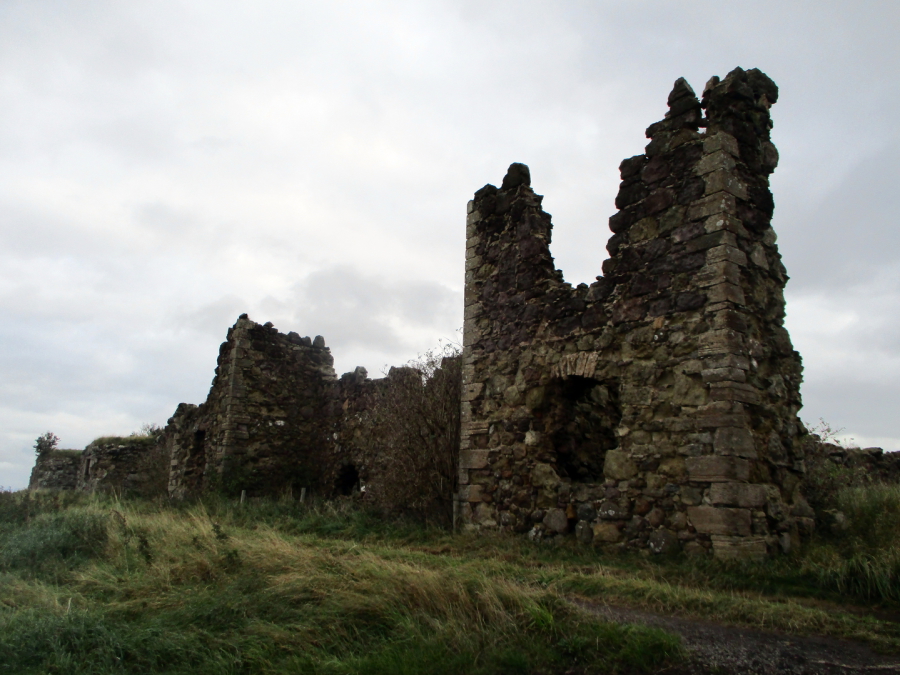 Barnes Castle (© Martin Coventry)
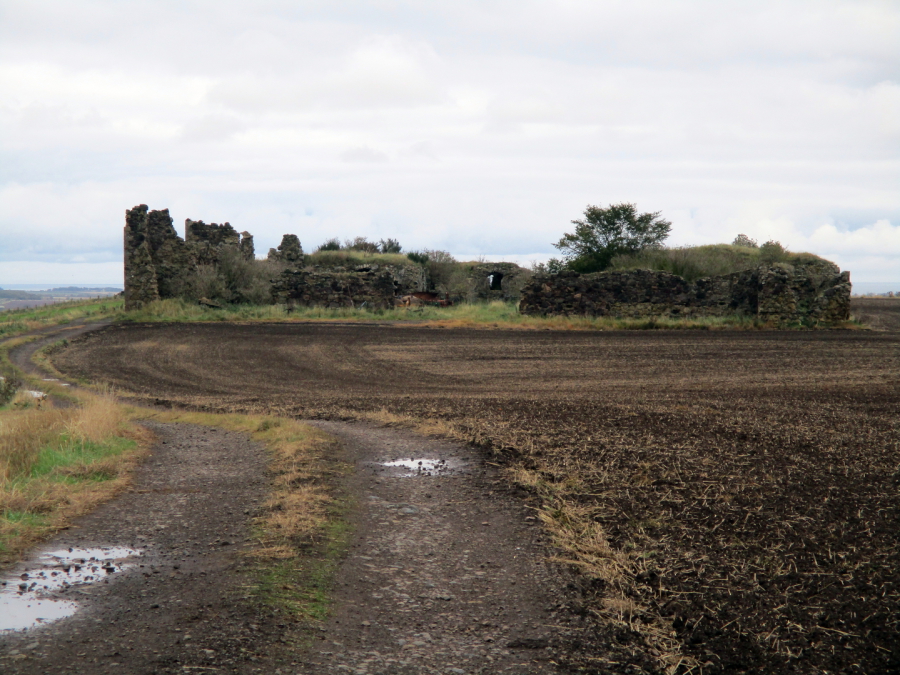 Barnes Castle (© Martin Coventry)
In a picturesque location above the Cogtail Burn, Barnes Castle was planned as a strong castle with six square towers around a courtyard, which enclosed ranges of buildings. The walls are pierced by gun ports. The stronghold was, however, never completed, and not built much above the vaults. The entrance, in the middle of one wall, was flanked by square towers. Although only fragmentary, the edifice is a romantic and impressive sight when viewed from the Athelstaneford road (B1343).
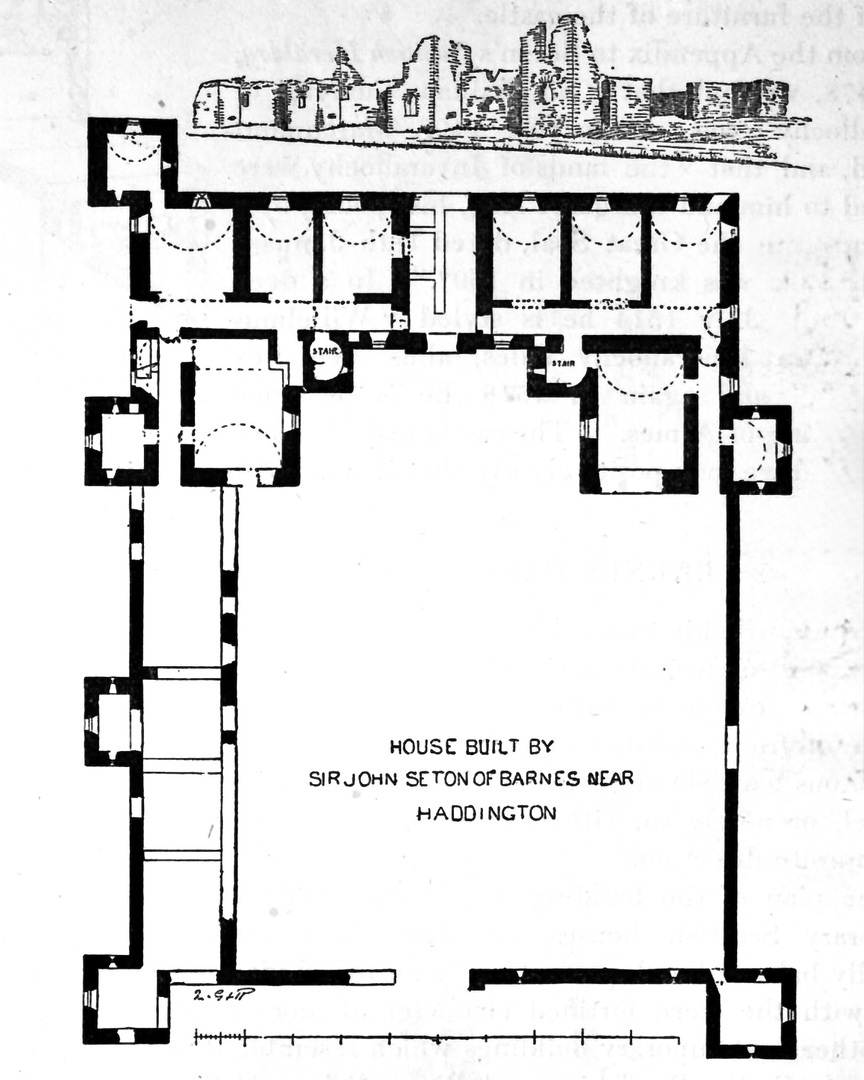 Barnes Castle: plan (M&R)
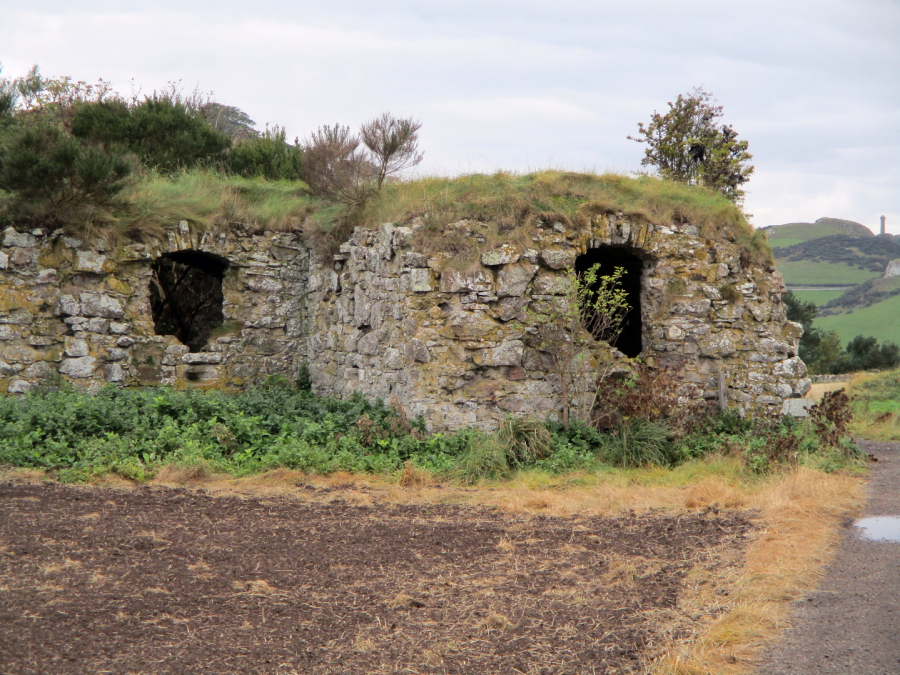 Barnes Castle (© Martin Coventry)
‘East Barnes’ and ‘West Barnes’ are both marked on Blaeu’s map of the Lothians (1630), then on Adair’s map of East Lothian (1682), although East Barns is given more prominence. ‘Vaults’ and ‘Barney Mains’ are on Forrest’s map of Haddingtonshire (1799). The OSNB (East Lothian 1853-1854) notes for The Vaults, ‘The ruins of a fortified grange or farmhouse and court of offices, situated on a commanding eminence … the walls stand about 10 feet high in places … for some time previous to 1745, this stronghold was used as a granary by the farmers of the surrounding country.’
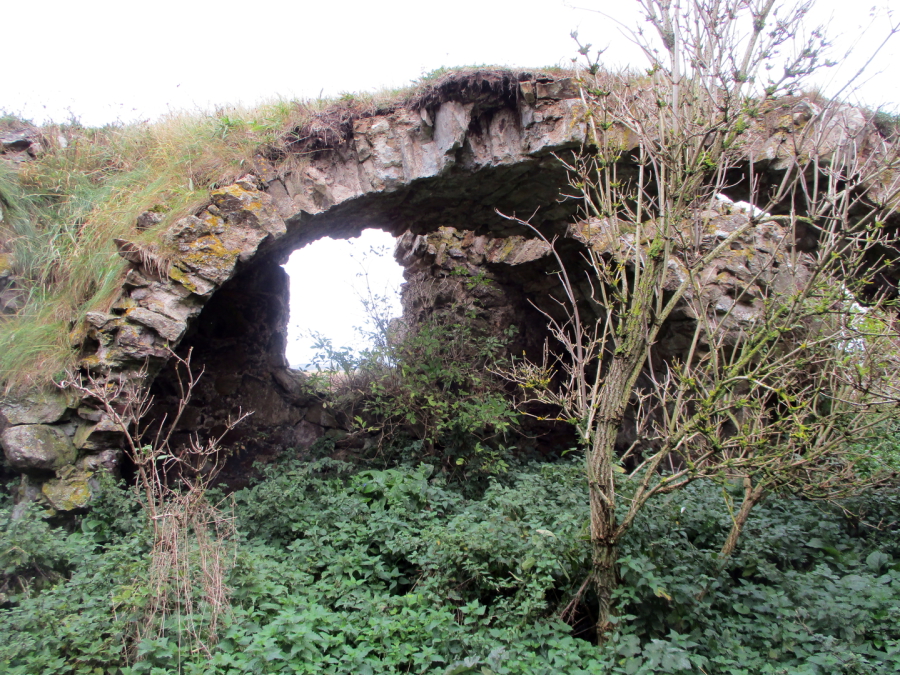 Barnes Castle (© Martin Coventry)
The Setons acquired the property from Robert the Bruce in the 13th century. Sir John Seton of Barnes built the castle, but died before it was completed. He spent much of his life as a diplomat at the court of Philip II of Spain. James VI recalled him, making him Treasurer of the Household. Seton died in 1594 and is buried in Seton Collegiate Church [NT 418751] (see Seton Castle). George Seton of Barns is on record in 1663.
Another George Seton of Barnes was a Jacobite and joined the 1715 Rising, but was captured at Preston that year. He sold the property to the Charteris Earl of Wemyss in 1715.
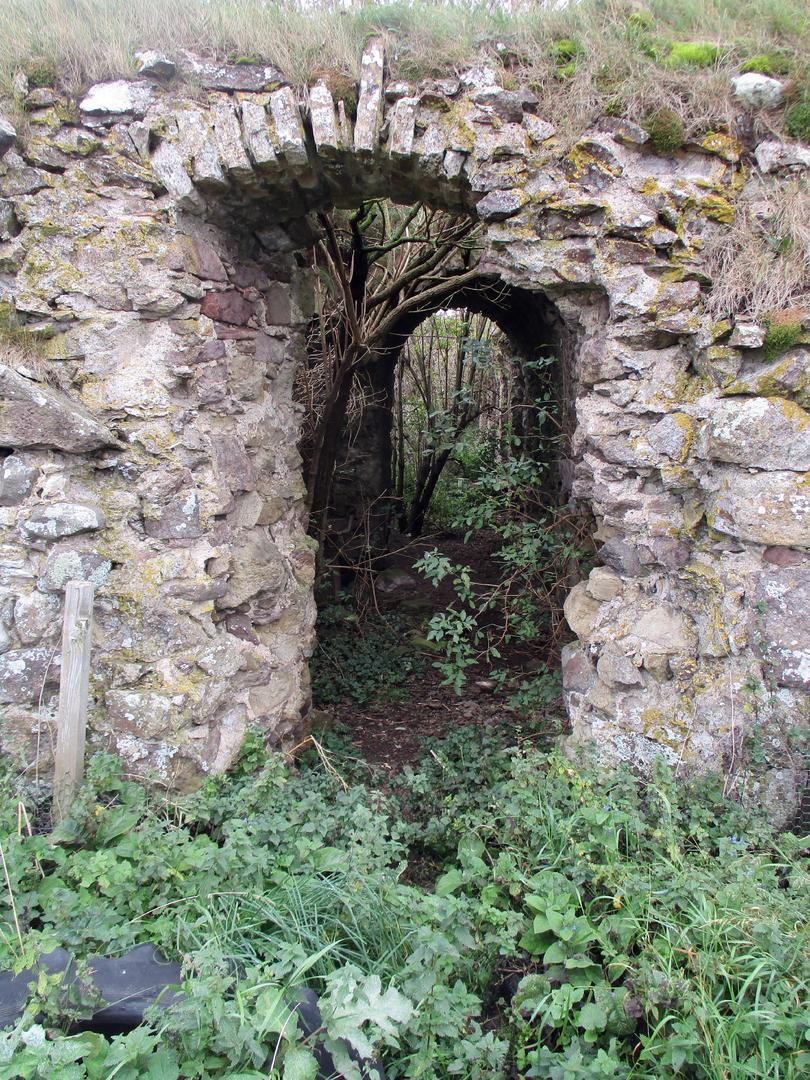 Barnes Castle (© Martin Coventry)
From: An Old Family or, The Setons of Scotland and America (Robert Seton, 1899):
‘In The Castellated and Domestic Architecture of Scotland (II., 233—234) there is a plan and view of Barnes, of which the learned authors say:
"The most remarkable features connected with the structure are the six square projecting towers which surround the walls. . . . These towers are provided with shot-holes which enfilade the walls. They give the ruins a thoroughly military character and it is this combination of the characteristics of Feudal architecture, with an advanced symmetrical style of domestic planning, which makes this a most interesting and valuable plan."
Barnes Castle was probably inspired by Sir John's residence in Castile, the land of Towers par excellence, and his early association with the Order of Calatrava.’
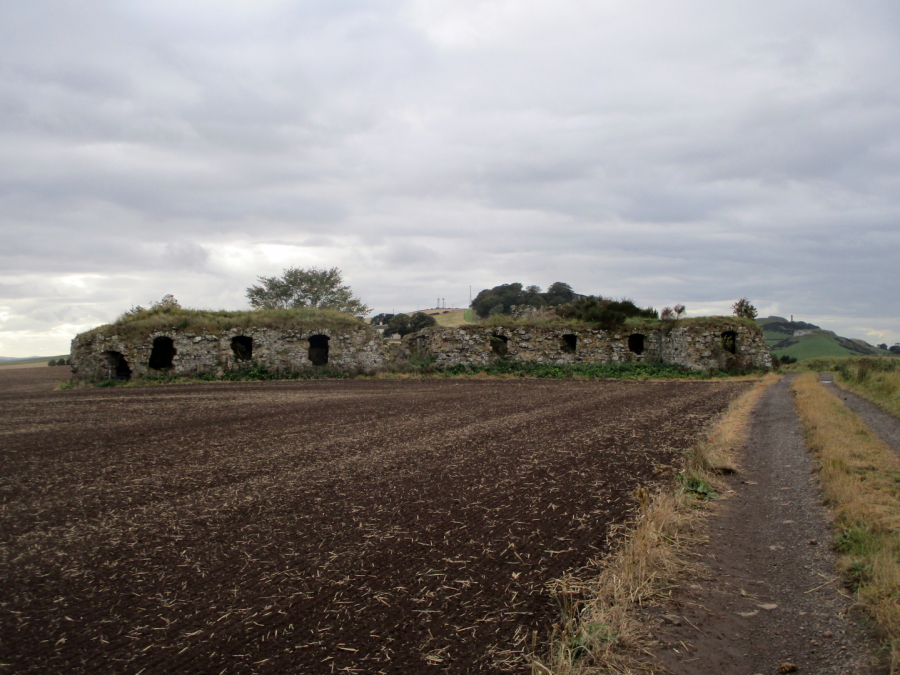 Barnes Castle (© Martin Coventry)
From: An Old Family or, The Setons of Scotland and America (Robert Seton, 1899):
‘His son, Sir John Seton of Barnes was served heir to his father on the 3rd October, 1615. He was a gallant man, and was made an officer of the Court by King Charles I. He acquired from Sir Robert Gordon of Lochinvar, “land in Ireland worth five hundred pounds sterling a year”; yet he had little rest or time to enjoy himself and complete his father’s castle, because he was imprisoned and fined in a considerable sum of money by the Scotch Rebels for being in arms in 1646 with the Marquess of Montrose.’
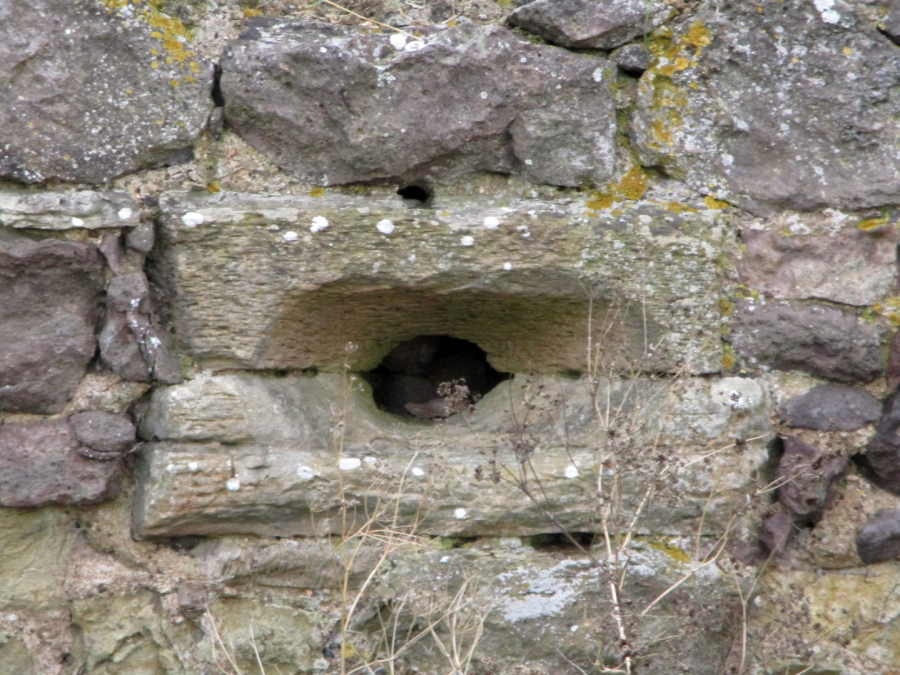 Barnes Castle: gunloop (© Martin Coventry)
From: An Old Family or, The Setons of Scotland and America (Robert Seton, 1899):
‘Sir George Seton (last) of Barnes. He first appears in 1704 and in 1707. After the death, in France, of the fourth Earl of Dunfermline, 1694, he assumed the title — the estates had been confiscated — and proclaimed the "Pretender" at Kelso on the 24th October, 1715. A few weeks later he was included in the surrender at Preston. The same year he sold the lands of Barnes to Colonel Charteris. It is not known how he escaped the consequences of the insurrection, but in 1732 he appears to haye resided very quietly at Haddington. By his wife Anne, daughter of Sir George Suttie of Balgone, he had a son and a daughter: James, of whom hereafter; Anne, who married John Don, of the town of Edinburgh, by whom she had a son, Sir George Don, Governor of Gibraltar. Sir George was buried in Seton Church.’
 The Castles of Scotland New Sixth Edition by Martin Coventry
New sixth edition.
The book is now available.
 Viridian: a vivid blend of book and website
Check any and all opening and access information with the sites themselves…




Contact Us


Goblinshead
Cockenzie House
22 Edinburgh Road
Cockenzie
EH32 0HY
Email: info@thecastlesofscotland.co.uk
Or use our contact form.



 Print
Print 