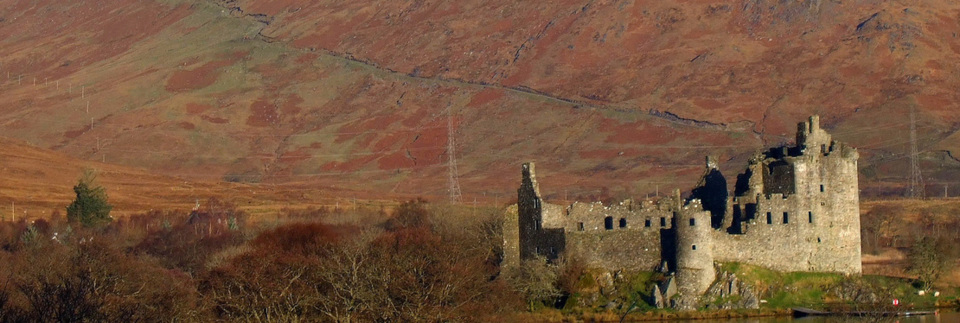
 The Castles of Scotland
Newark Castle, St Monans
Newark Castle, near the pretty fishing village of St Monans in the East Neuk of Fife, is a picturesque crumbling ruin on cliffs above the Firth of Forth, once owned by the Covenanter general Sir David Leslie.
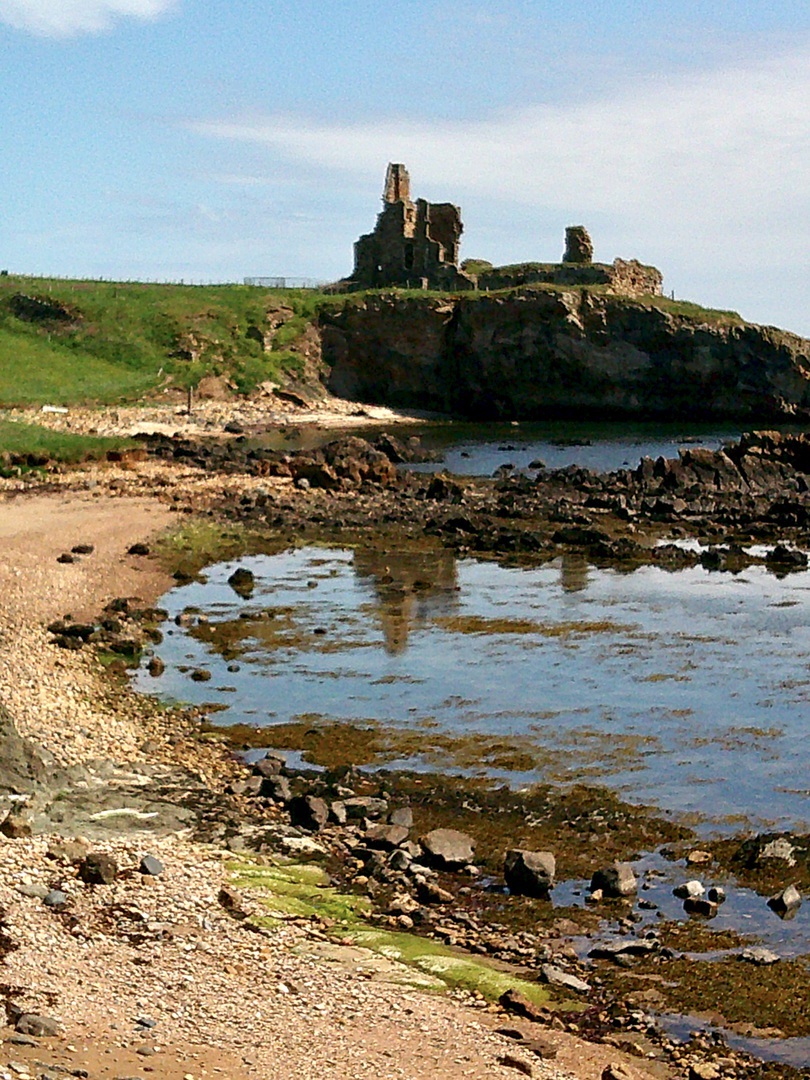 Newark Castle, St Monans (© Martin Coventry)
Ruin NO 518012 OS: 59 KY10 2DB 409
View from exterior: surrounded by metal fence. On coastal footpath west from St Monans.
St Monans Old Kirk: regularly open to the public. Just west of village.
Web: stmonansauldkirk.com
St Monans Windmill: view from exterior with remains of saltpans. On coastal footpath east from St Monans.
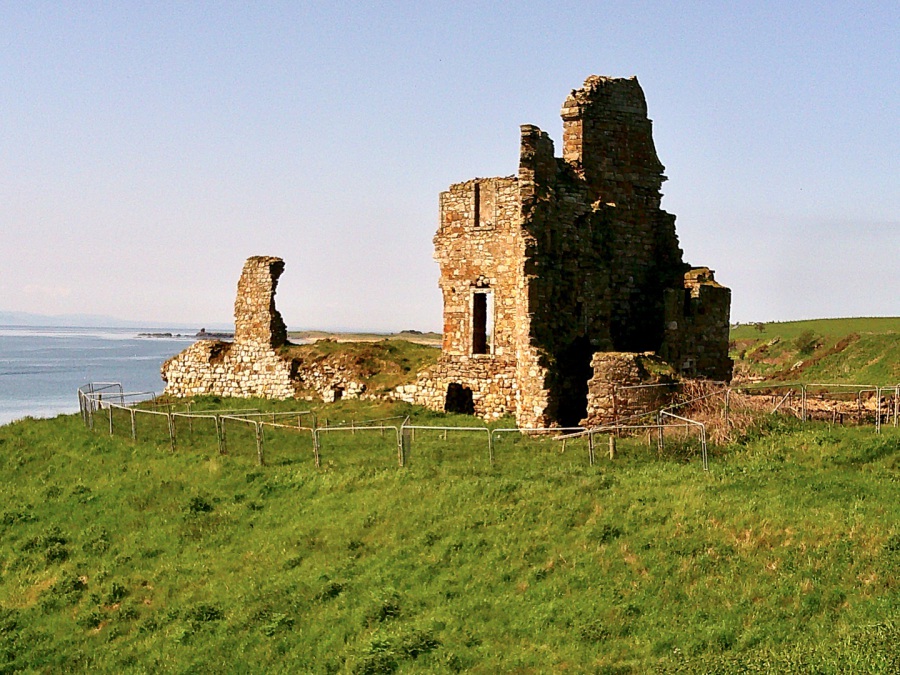 Newark Castle, St Monans (© Martin Coventry)
On cliffs above the sea, Newark Castle or Newark of St Monans is a very ruined but picturesque 15th-century castle, which was altered and extended in the 16th and 17th centuries.
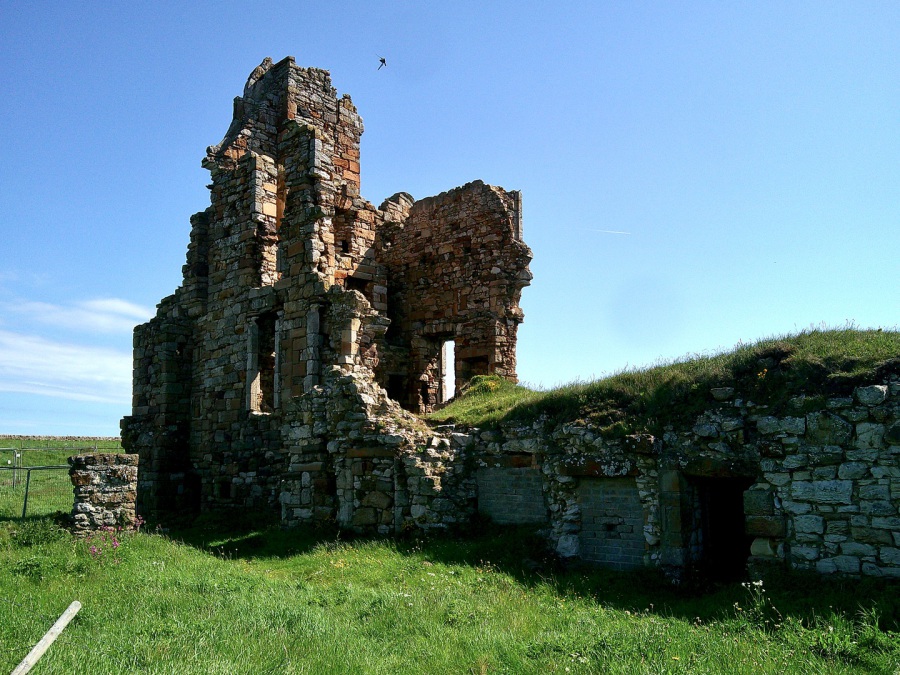 Newark Castle, St Monans (© Martin Coventry)
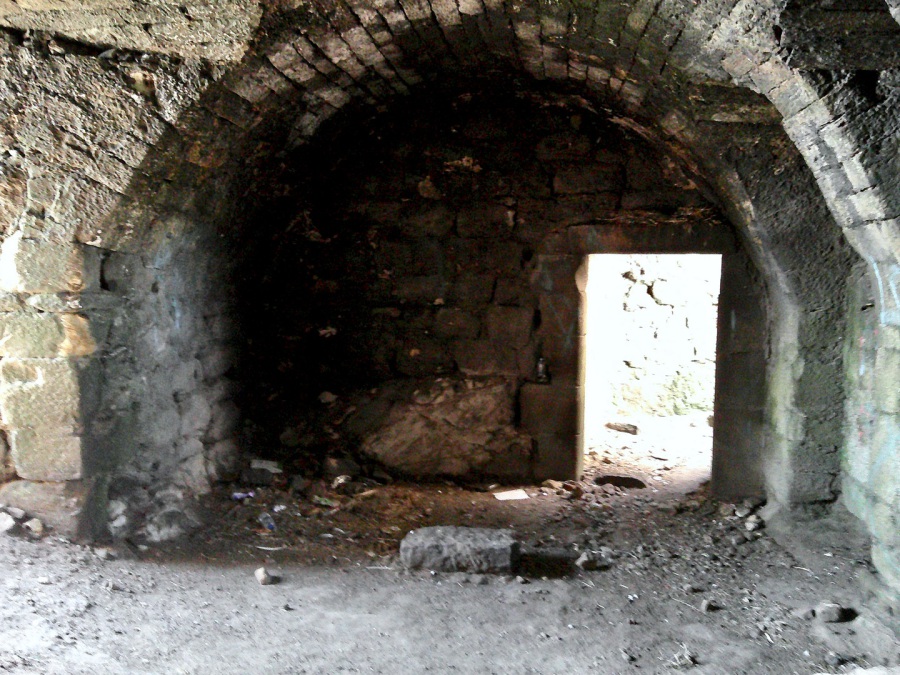 Newark Castle, St Monans, vaulted cellar (© Martin Coventry)
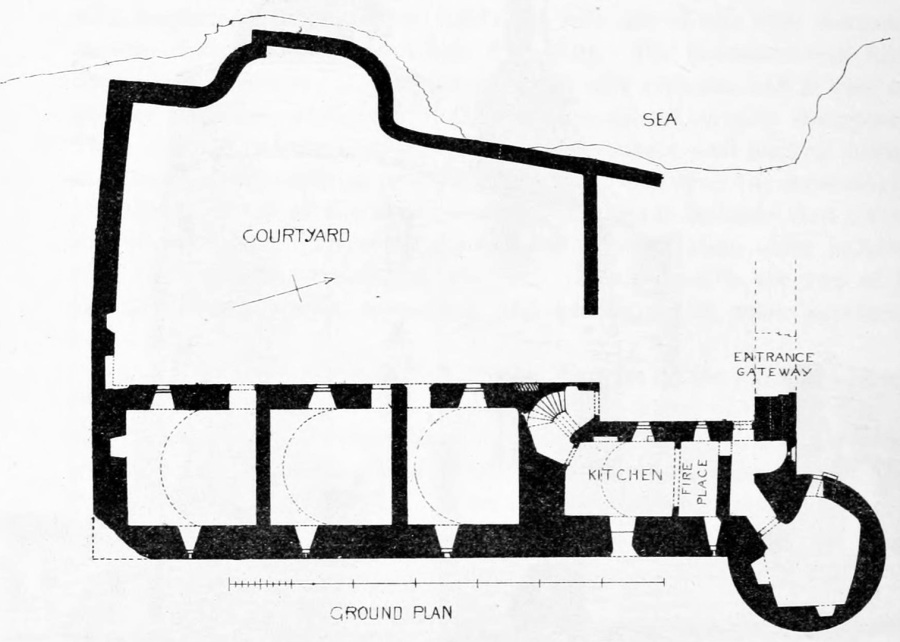 Newark Castle, St Monans: plan (M&R)
Not much remains except vaulted cellars, part of a block with thick outer walls, and the remains of a large round five-storey tower, as well as fragments of a walled courtyard and other buildings. The walls were as much as seven-feet thick, and the castle was formerly protected by a ditch and at one time had a terraced garden.
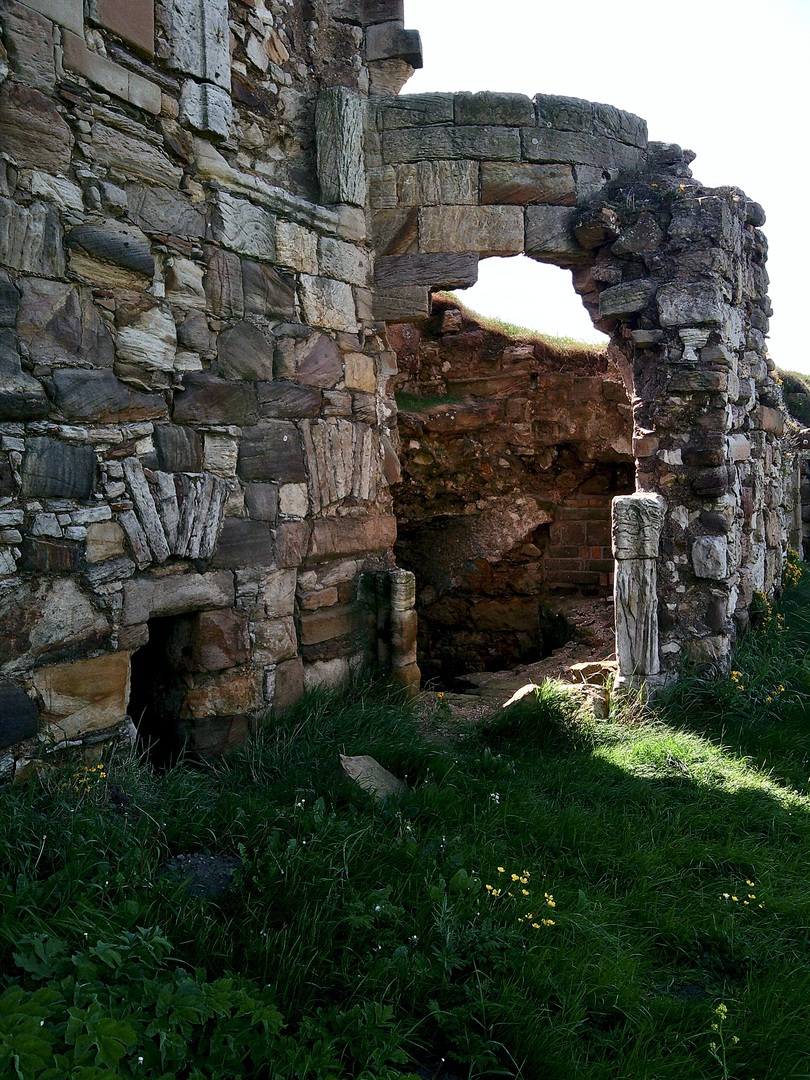 St Monans Castle, St Monans: courtyard (© Martin Coventry)
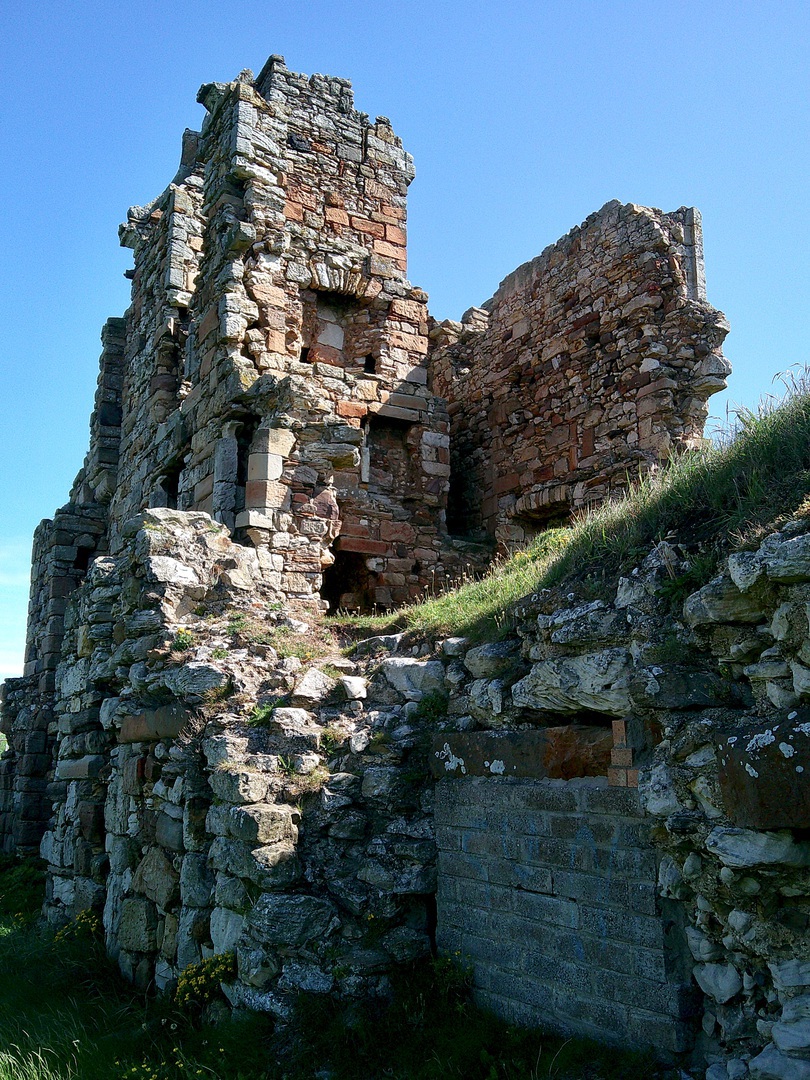 Newark Castle, St Monans (© Martin Coventry)
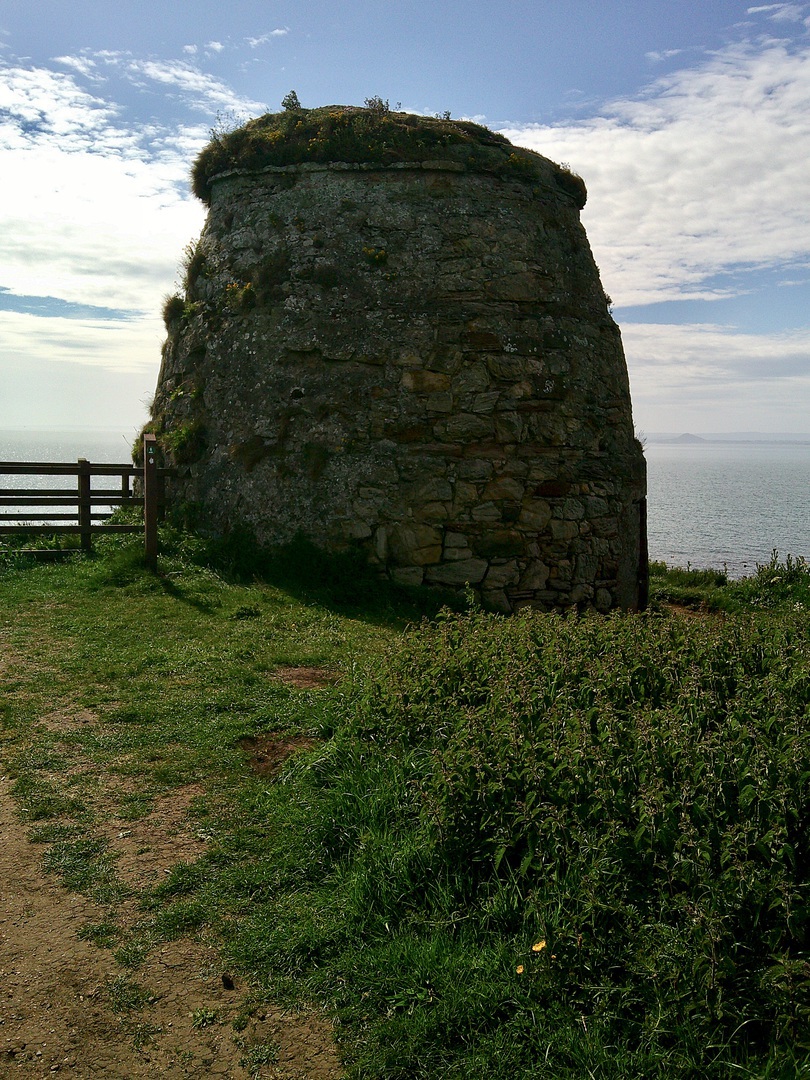 Newark Castle, St Monans: doocot (© Martin Coventry)
There is a fine beehive doocot [NO 519012], in a tolerable state of repair, which dates from the 16th century.
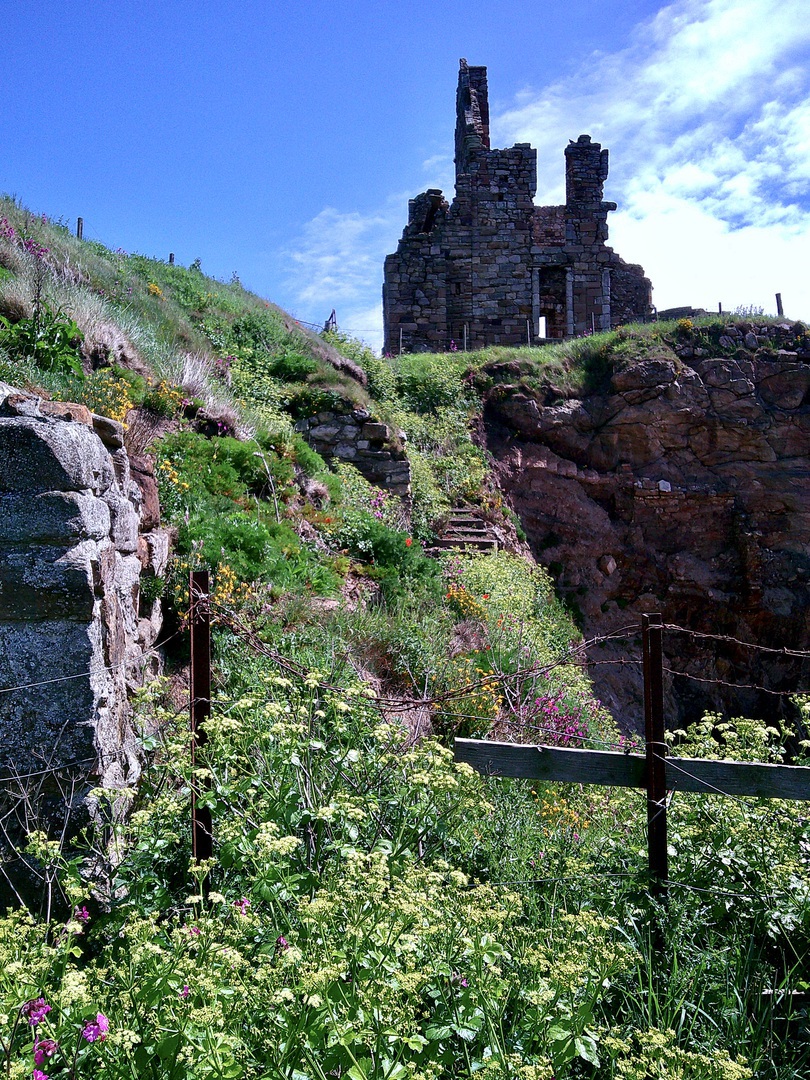 Newark Castle, St Monans: old entrance path and stair (© Martin Coventry)
‘Cast. of St Monans’ is marked on Blaeu’s map of Fife (1654), while ‘Newwork’ is on Adair (1684), then ‘Newark’ is depicted as a house on Ainslie (1775).
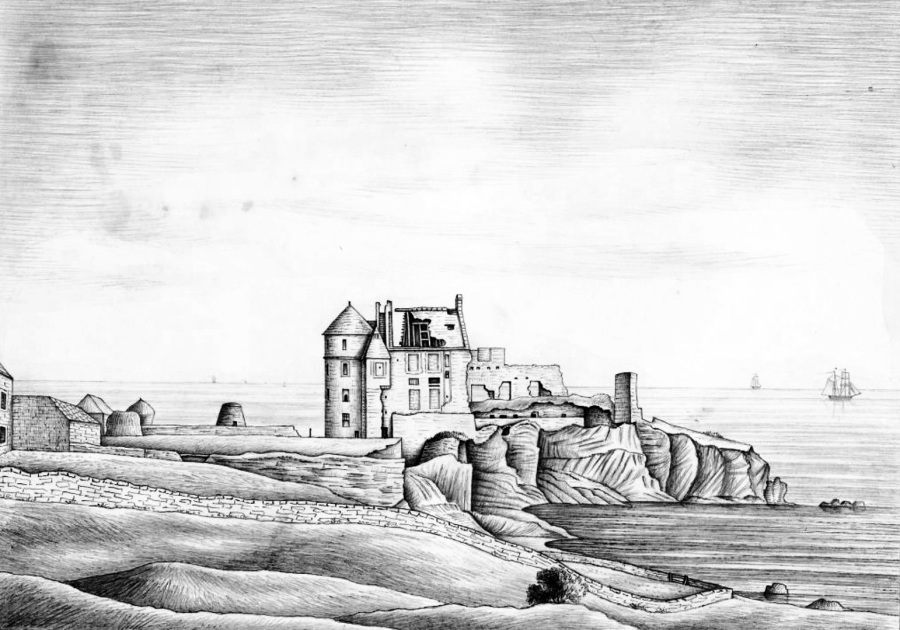 Newark Castle, St Monans: 1838 (Courtesy of HES (Papers of Alexander Archer, artist, Edinburgh, Scotland))
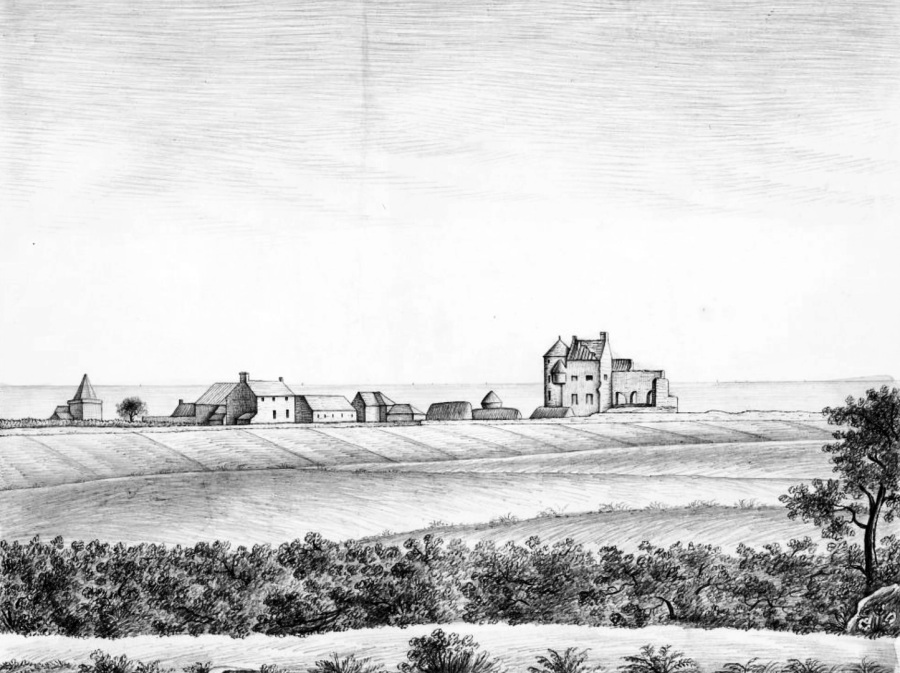 Newark Castle, St Monans: 1838 (Courtesy of HES (Papers of Alexander Archer, artist, Edinburgh, Scotland))
The OSNB (1855) notes, ‘The ruins of an ancient castle … the walls are still in a state of tolerable preservation, and are of great strength, being in many places six- and seven-feet in thickness.’ On the same page is quoted from the OSA, presumably from the 1790s, ‘The northern half has a roof in tolerable repair. The ground storey is occupied by dark vaults. The middle and upper storeys afford comfortable dwelling houses to the servants upon the farm of Newark. They did at least till of late.’
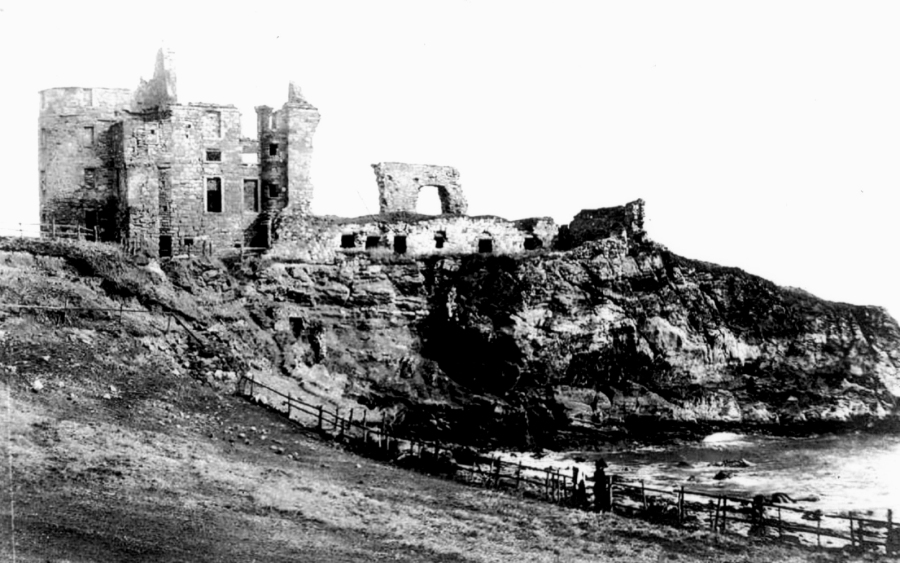 Newark Castle, St Monans (old postcard)
The lands were originally a property of the Kinloch family, but passed to the Sandilands of Cruivie. Mary, Queen of Scots, visited in 1565. William Sandilands of St Monans had an Act is his favour of 1621 which mentions the mill, fortalice, house, port and harbour of the same.
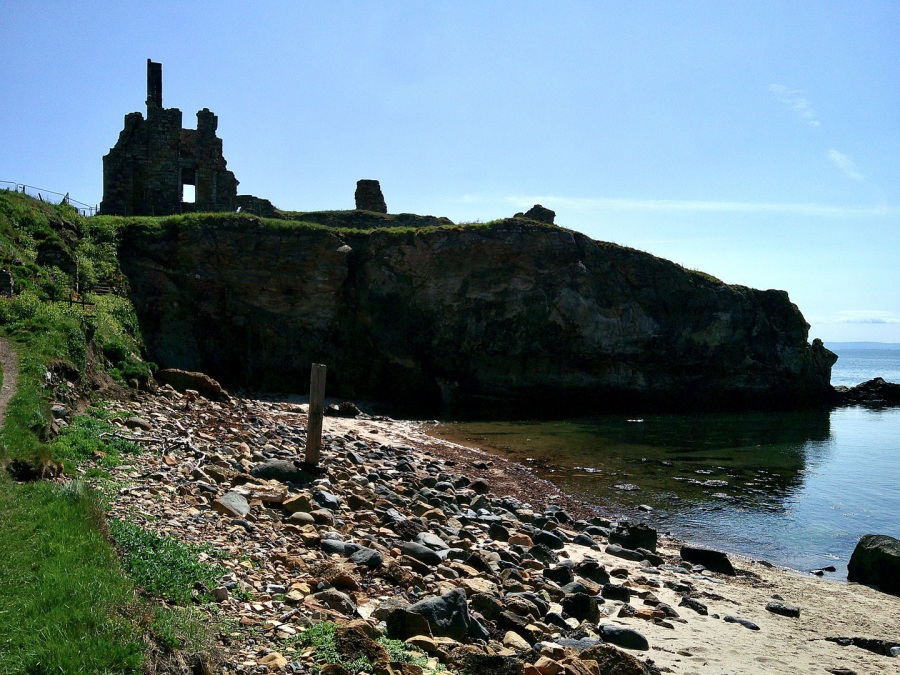 Newark Castle, St Monans (© Martin Coventry)
The Sandilands became bankrupt and sold the castle in 1649 to the Covenanter General Sir David Leslie. Leslie served under Gustavus Adolphus in Sweden, and joined the army of Covenanters in Scotland in 1643. He fought at Marston Moor in 1644 and defeated the Marquis of Montrose at Philiphaugh in 1645 and then led his forces up the western seaboard of Scotland with much bloodshed. He was, however, defeated by Cromwell at Dunbar 1650, and was captured at the Battle of Worcester the following year, after which he spent nine years in the Tower of London. After the Restoration he was made Lord Newark. He died in 1682.
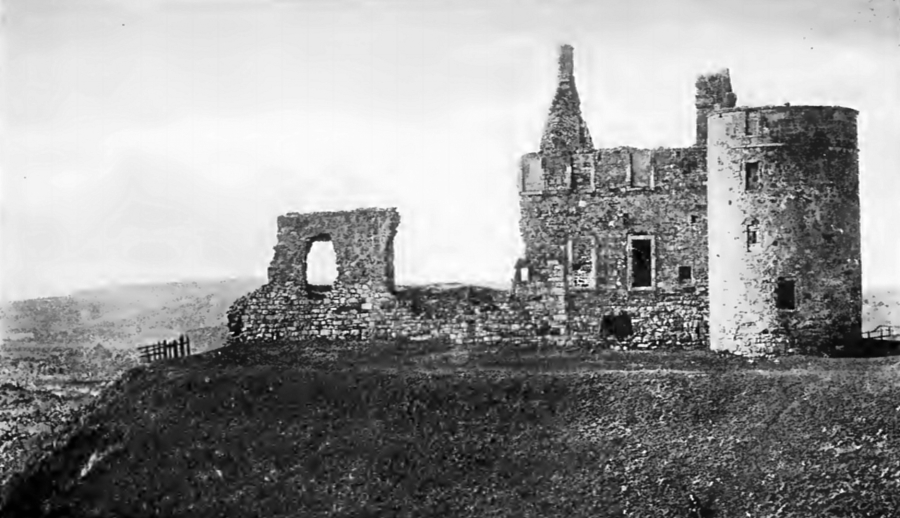 Newark Castle, St Monans (Clark, 1916)
The castle passed by marriage to the Anstruthers when the heiress Jean Leslie, daughter of David Leslie, 2nd Lord Newark, married Alexander Anstruther of Anstruther in 1694, and Sir Andrew Anstruther of Newark is on record in 1704. Jean died in 1740.
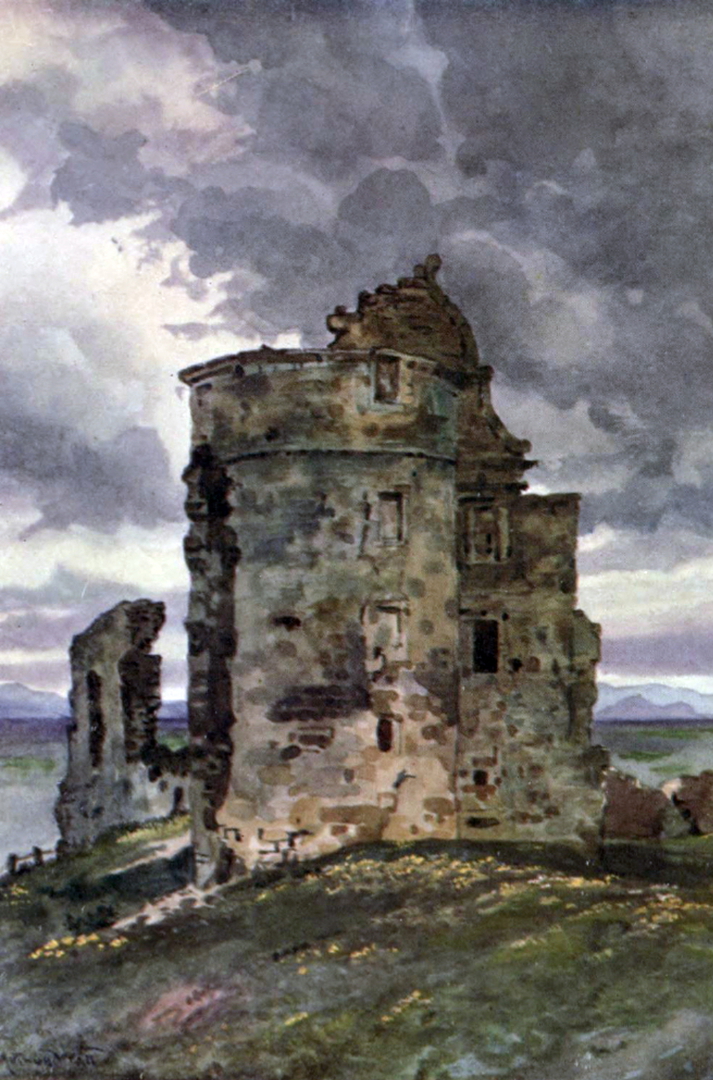 Newark Castle, St Monans (Geddie, 1900?)
Newark was sold to the Bairds of Elie in the 19th century, who held the property into the 20th century or later. Drawings and plans for a proposed restoration were made by Sir Robert Lorimer for Sir William Burrell (of Burrell Collection fame) around 1898 but came to nothing when Baird of Elie decided not to sell the property. The castle was partially excavated in 2002 when a chamber with gunloops was found below the floor of the round tower.
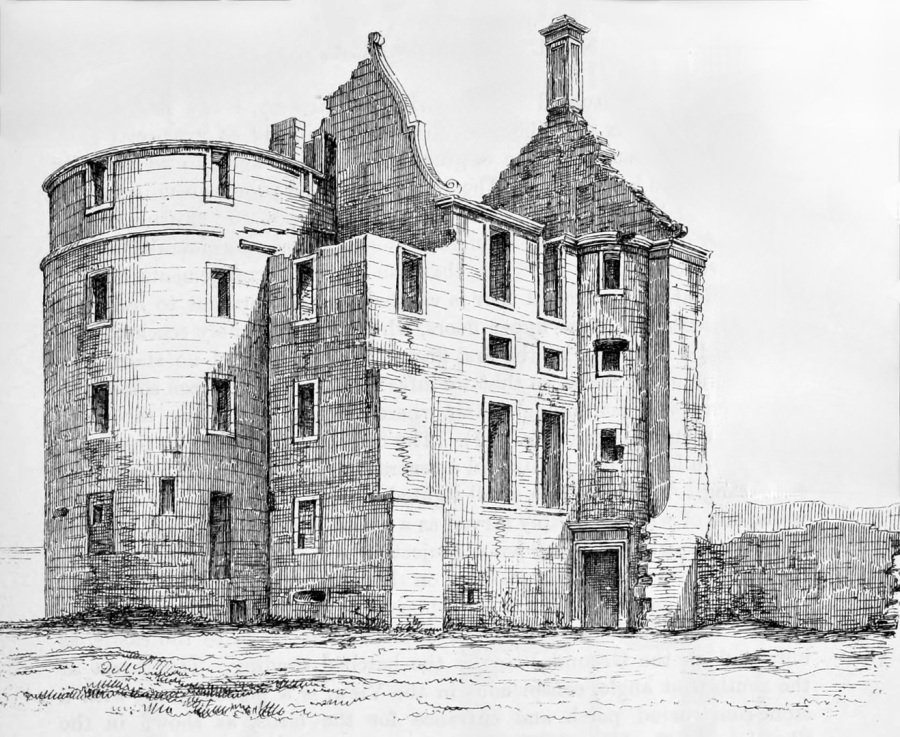 Newark Castle, St Monans (M&R)
Newark is said to have been the castle from where the garrison on the Bass Rock near North Berwick received supplies when held for the Stewarts. In 1745 the castle was reputedly plundered and damaged by Jacobites, though it was still partly roofed in 1838.
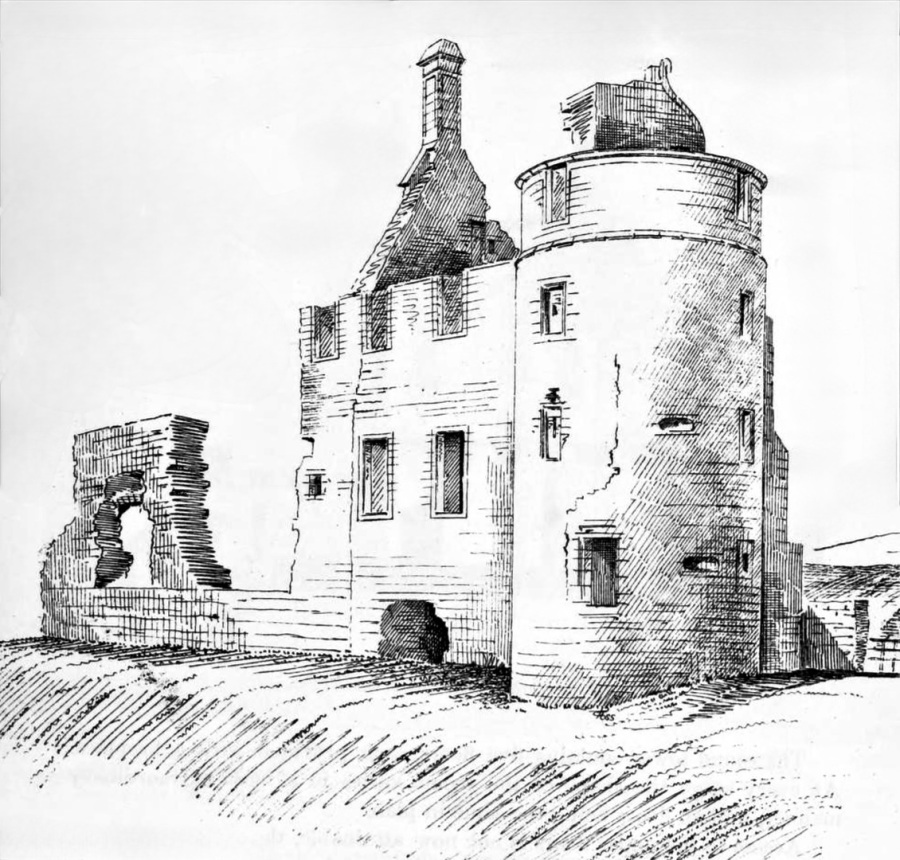 Newark Castle, St Monans (M&R)
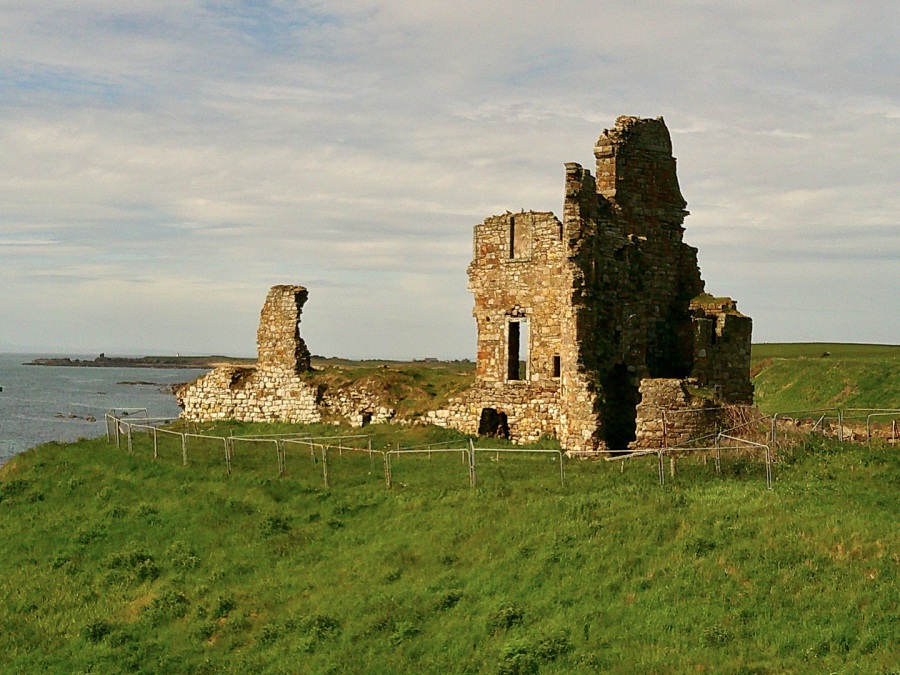 Newark Castle, St Monans (© Martin Coventry)
The castle is reputed to be home to a ‘Green Lady’, the ghost of Jean Leslie, daughter of Sir David Leslie, and the swish of her dress has been reported. Caves below the castle are believed to have been used for smuggling, and it is possible that the ghost was invented to keep people away. ‘Green Ladies’ are hardly unusual in Scotland’s castles, however.
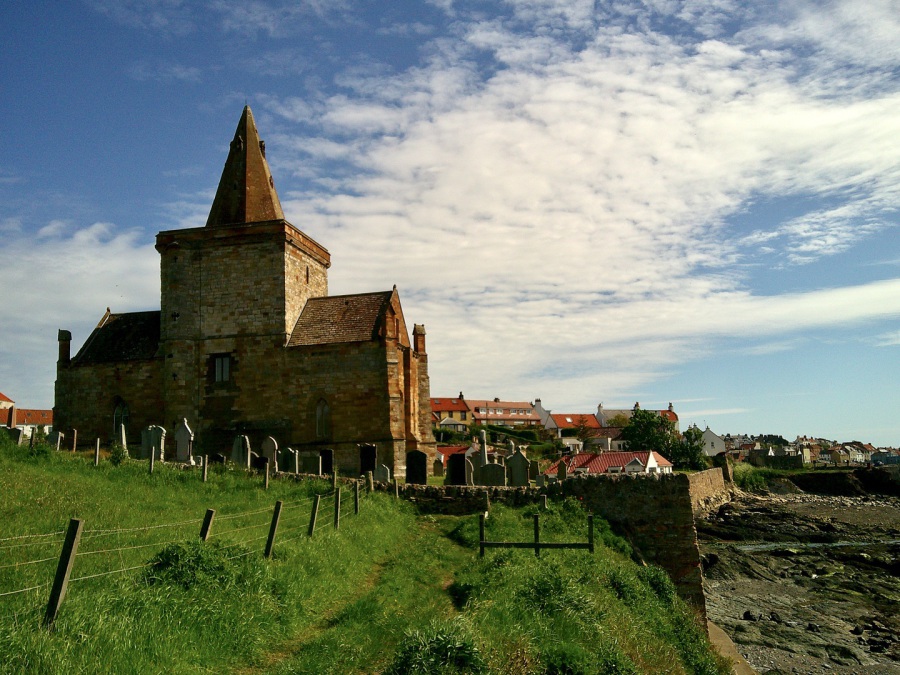 Newark Castle, St Monans: St Monans Old Kirk (© Martin Coventry)
St Monans Old Kirk [NO 523014], an impressive edifice located in a picturesque location above the sea in an expansive burial ground, dates from the 14th century on an older site dedicated to St Monan. Monan is said to have been associated with St Adrian of the Isle of May, to have used a cave near the burn, and he is reputed to have been slain along with St Adrian by Vikings in the 870s.
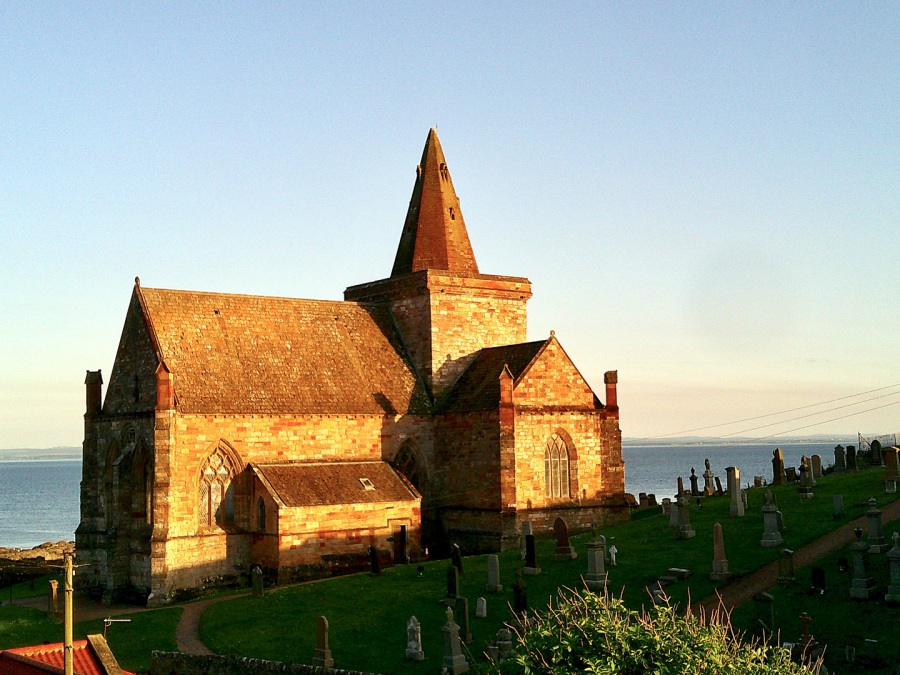 Newark Castle, St Monans: St Monans Old Kirk (© Martin Coventry)
The present church was founded by David II in 1370 and became a Dominican establishment. The church was burned by the English in 1544, and used by Cromwell to stable horses in the 1650s.
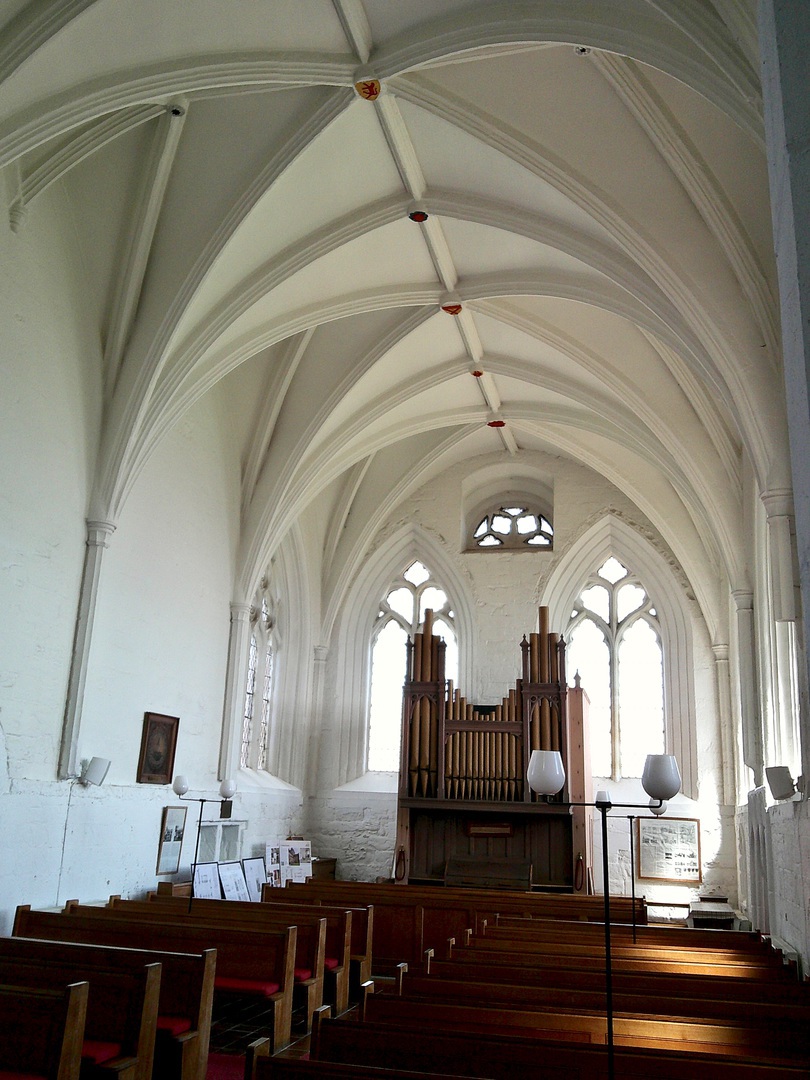 Newark Castle, St Monans: St Monans Old Kirk, interior (© Martin Coventry)
The church was of cruciform plan with a rib-vaulted roof and a central tower and spire. In 1647 the choir and transepts were walled off and became ruinous. The building was restored in 1828 by William Burn with the reroofing of the transepts, and then again in 1961. The building has recently been taken over by the local community, and there are plans for renewal after the church ceased worship in 2022.
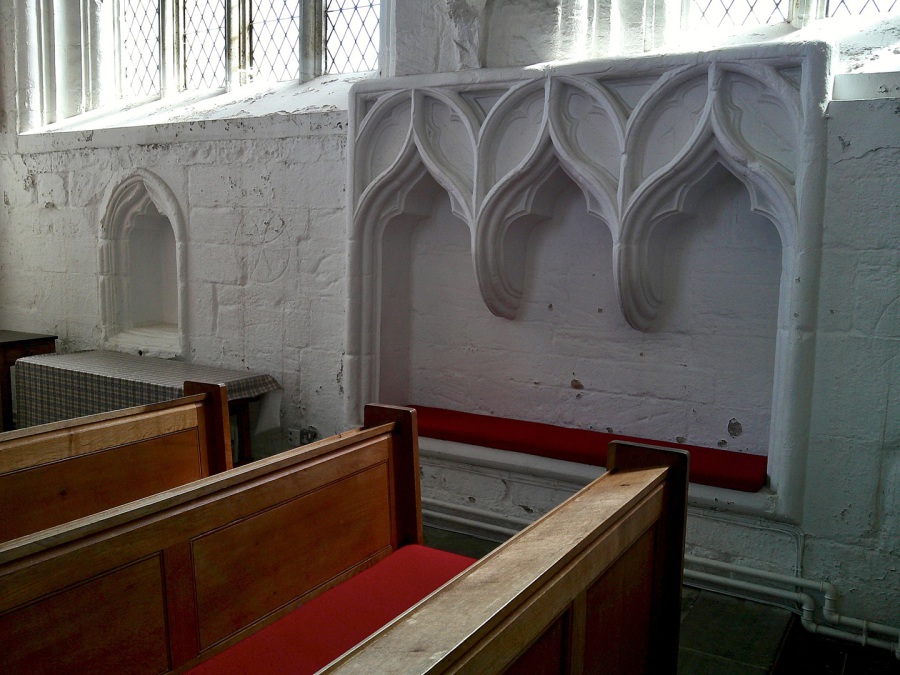 Newark Castle, St Monans: St Monans Old Kirk, interior (© Martin Coventry)
The church was used as a location in The Railway Man (2013) with Colin Firth and Jeremy Irvine, then in the 2026 version of Whisky Galore!, while on 1981 was used in the Johnny Cash Christmas Special.
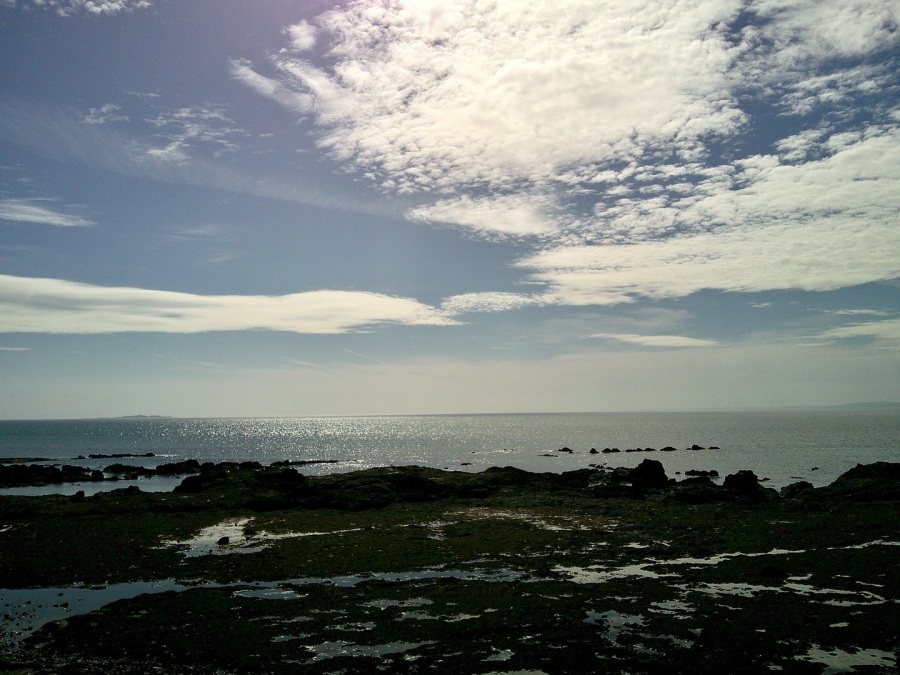 Newark Castle, St Monans: beach (© Martin Coventry)
The Battle of St Monans was fought along the beach in 1548 when an English force sent to raid Fife was surprised and routed by local men with the loss of as many as 900 on the English side and the sinking of one of their ships.
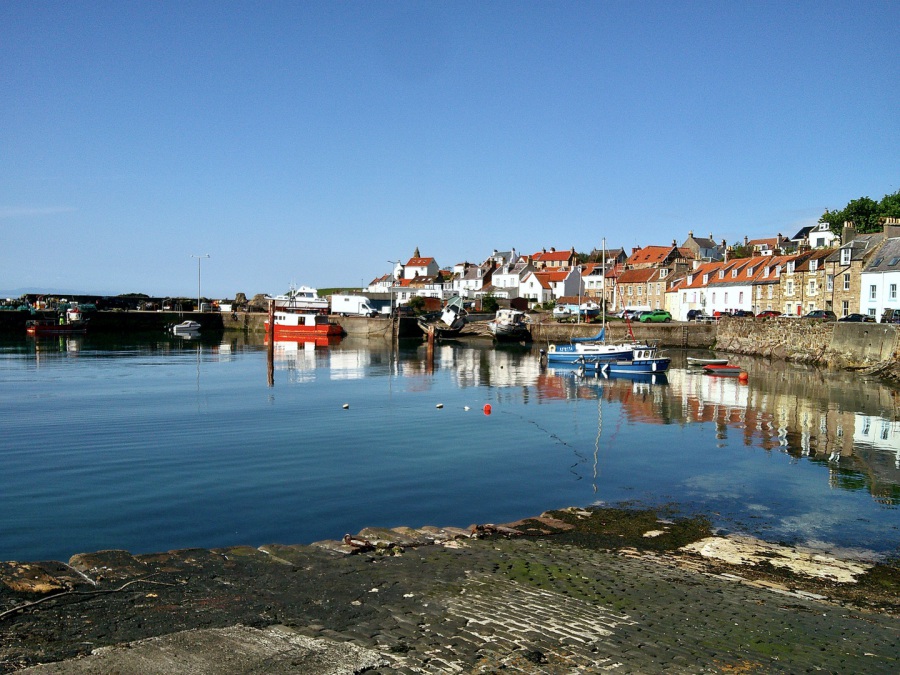 Newark Castle, St Monans: St Monans harbour
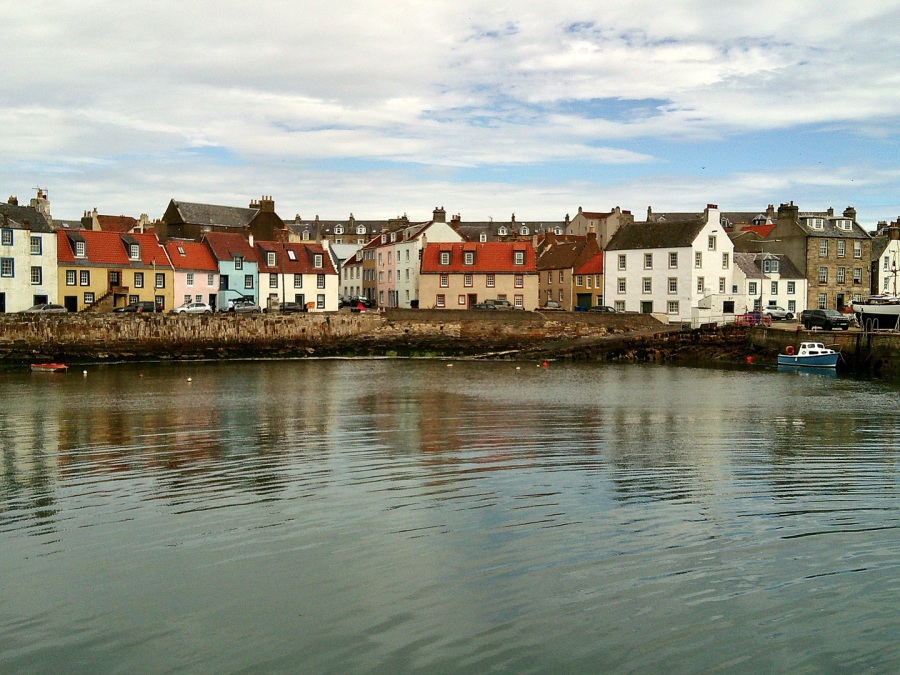 Newark Castle, St Monans: St Monans from the harbour (© Martin Coventry)
St Monans is a very attractive fishing village with an extensive harbour and zig-zaggy breakwater, picturesque houses and winding streets and pends.
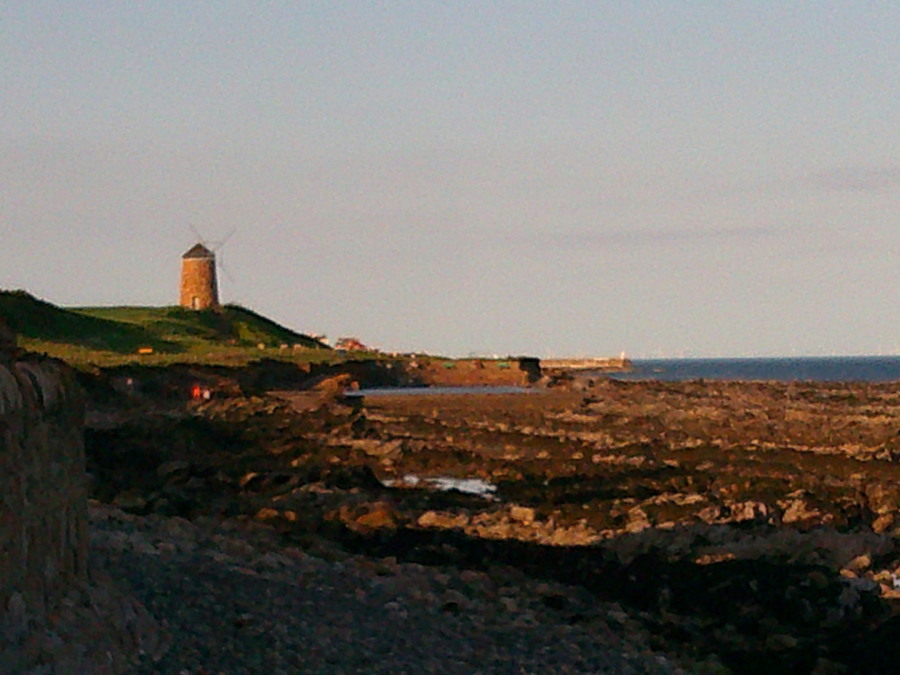 Newark Castle, St Monans: windmill (© Martin Coventry)
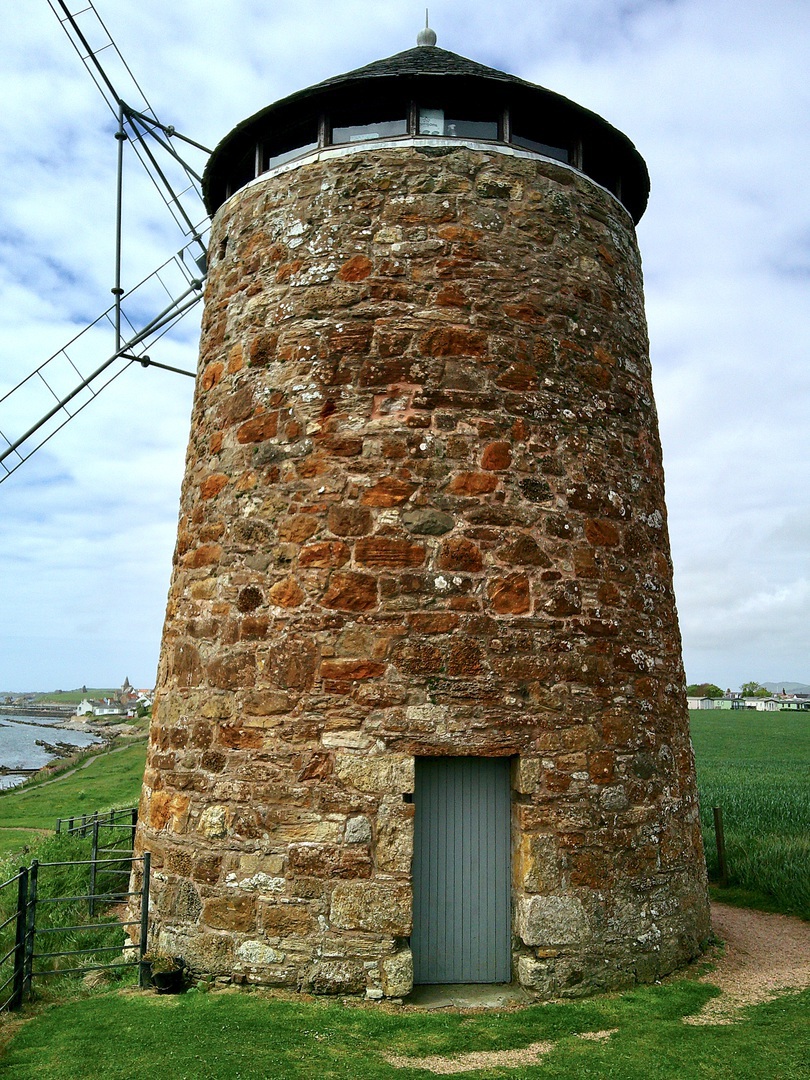 Newark Castle, St Monans: windmill (© Martin Coventry)
On the east side of the St Monans is a windmill. This was used to pump seawater for the then extensive salt pans, some remains of which survive.
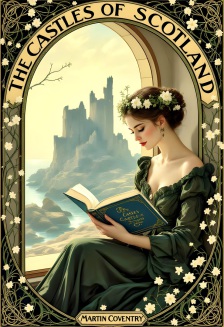
 The Castles of Scotland New Sixth Edition by Martin Coventry
New sixth edition.
The book is now available.
 Viridian: a vivid blend of book and website
Check any and all opening and access information with the sites themselves…




Contact Us


Goblinshead
Cockenzie House
22 Edinburgh Road
Cockenzie
EH32 0HY
Email: info@thecastlesofscotland.co.uk
Or use our contact form.



 Print
Print 